 Store Locator


South Indian jewellery is not merely ornamental, it is a visual language of heritage, devotion, prosperity, and artistry. For centuries, these designs have adorned queens, temple deities, classical dancers, and brides, becoming inseparable from the cultural identity of the region.
From elaborate temple-inspired masterpieces to intricately detailed gold motifs, South Indian jewellery represents both artistic brilliance and enduring investment.
Unlike transient fashion trends, traditional South Indian jewellery evolves while preserving its essence. It reflects faith, social status, family legacy, and financial security, all at once.
In this comprehensive guide, we explore the most popular and classic South Indian jewellery designs, their symbolism, craftsmanship, and why they continue to hold timeless appeal in modern wardrobes.
The Cultural Significance of South Indian Jewellery
To understand the popularity of South Indian jewellery, one must understand its deep cultural roots. Jewellery in South India is not purchased casually; it is chosen with meaning. Every motif, every weight of gold, and every handcrafted detail carries emotional and spiritual significance.
Traditional South Indian jewellery reflects:
- Devotion and temple art: Many designs are inspired by temple architecture and deities such as Goddess Lakshmi, symbolising prosperity and divine blessings.
- Symbols of prosperity and abundance: Motifs like mango leaves, coins, peacocks, and lotuses signify fertility, wealth, and auspicious beginnings.
- Family legacy and heirloom value: These pieces are often passed down through generations, carrying stories of weddings, festivals, and milestones.
- Investment in high-purity gold: Gold is central to South Indian households as both adornment and financial security.
In South India, gold is not viewed merely as jewellery; it is considered stability, respect, and generational wealth. This is why classic South Indian jewellery continues to endure despite changing fashion landscapes.
Types of South Indian Jewellery That Remain Popular
Let us explore the most celebrated types of South Indian jewellery that define the region’s aesthetic and continue to influence bridal and festive collections today.
Temple Jewellery
Temple jewellery is perhaps the most iconic of all South Indian jewellery designs. Historically crafted to adorn temple idols, these pieces feature intricate carvings inspired by temple sculptures and architecture.
Common motifs include:
- Goddess Lakshmi seated on a lotus
- Peacocks symbolising grace
- Elephants representing strength
- Floral and paisley patterns
Typical temple jewellery pieces include long harams, statement pendants, jhumkas, and Vanki armlets.
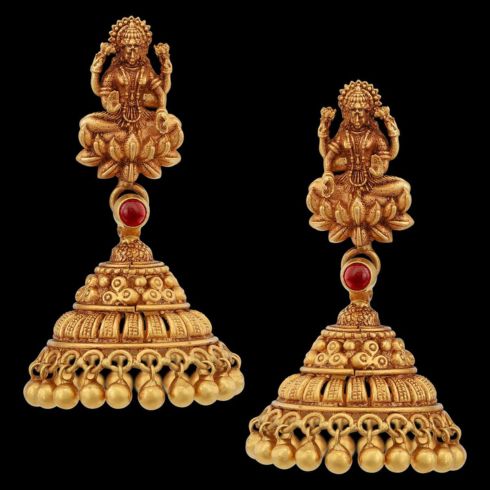
Today, temple jewellery remains an essential part of weddings, Bharatanatyam performances, and festive celebrations. While traditionally heavy and ornate, modern interpretations include lighter temple-inspired pieces suited for contemporary wear.
Kasu Mala (Coin Necklace)
The Kasu Mala, or coin necklace, is a hallmark of typical South Indian jewellery. It features rows of gold coins embossed with Goddess Lakshmi, symbolising wealth and prosperity.
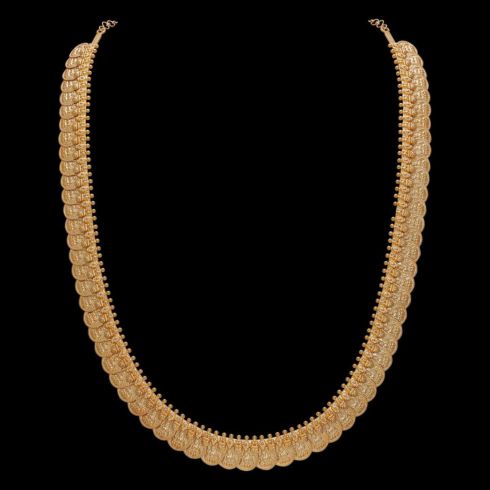
Traditionally worn by brides and during religious functions, the Kasu Mala has evolved into layered variations that can be styled for both grand ceremonies and modern occasions. It remains a defining feature of classic South Indian jewellery due to its cultural depth and timeless appeal.
Manga Malai (Mango Necklace)
The mango motif, known as manga, represents fertility and auspicious beginnings. The Manga Malai is deeply associated with Tamil bridal jewellery and is a staple in traditional South Indian jewellery.
The repeating mango-shaped motifs create a rich, sculptural aesthetic. Contemporary versions may include diamond embellishments or slimmer silhouettes, making them adaptable beyond wedding ceremonies.
Haram (Long Necklace)
The haram is a long necklace traditionally layered with shorter necklaces for a regal effect. It plays a central role in weddings and temple ceremonies.
Modern brides now choose harams that can be separated into smaller components, ensuring versatility. This shift reflects how South Indian jewellery designs continue to adapt to modern lifestyles while maintaining grandeur.
Odiyanam (Waist Belt)
The Odiyanam is a striking waist belt worn over sarees. It accentuates the bridal silhouette and symbolises grace and prosperity.
Historically elaborate and heavily embellished, today’s Odiyanams include modular designs that can transform into necklaces or standalone pieces, aligning with contemporary preferences for multi-use jewellery.
Jhumkas
Jhumkas are among the most universally loved South Indian jewellery designs. From elaborate temple jhumkas to diamond-studded variations, they frame the face beautifully and suit both festive and everyday ethnic wear.
Their versatility ensures that jhumkas remain one of the most enduring pieces in South Indian collections.
Vanki (Armlet)
The V-shaped armlet is deeply associated with bridal attire. Worn on the upper arm, it enhances the elegance of saree drapes and adds a regal touch.
Although primarily bridal, lighter Vanki designs are now styled for pre-wedding functions and classical performances.
Why South Indian Jewellery Endures
The popularity of classic South Indian jewellery continues because of four key factors:
Exceptional Craftsmanship
Each piece is intricately handcrafted, often requiring days of detailed artistry. Traditional techniques are preserved and passed down through generations of goldsmiths.
Cultural Identity
Jewellery in South India is intertwined with religious rituals, festivals, and family traditions. It is both an adornment and a cultural symbol.
Investment Value
High-purity gold ensures enduring financial worth, making jewellery both emotional and practical.
Heirloom Potential
Unlike fast-fashion accessories, South Indian jewellery is designed to be treasured and inherited.
South Indian Jewellery Designs in the Modern Era
Today’s woman seeks jewellery that honours tradition while fitting seamlessly into modern life. As a result:
- Bridal jewellery is crafted to be multi-functional
- Temple motifs are paired with diamonds
- Classic patterns are reinterpreted in lightweight forms
- Heirloom pieces are redesigned for contemporary wear
The essence remains traditional, the styling evolves with each generation.
Final Thoughts
The most popular jewels in South India are not simply ornaments, they are living traditions. From temple jewellery and Kasu Malas to Odiyanams and Jhumkas, these pieces embody devotion, heritage, and timeless elegance.
If you are looking to explore timeless South Indian jewellery designs crafted with heritage and precision, you can discover exquisite collections at Vummidi Bangaru Jewellers (VBJ), where tradition continues to shine.
0 Comments